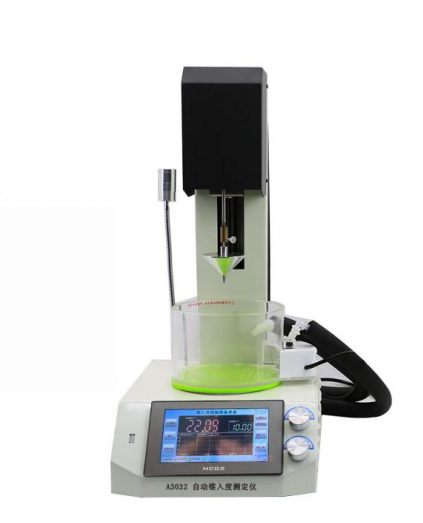

How to Judge the Performance of an Asphalt Penetration Tester
How to Evaluate the Performance of an Asphalt Penetration Tester
Asphalt penetration is a core indicator for measuring the consistency and hardness of asphalt, directly affecting the durability of roads and the reliability of waterproofing. The performance of the penetration tester is crucial for obtaining accurate and reliable data. Faced with various instruments on the market,
you can scientifically evaluate their performance by focusing on four key dimensions.
1. Measurement Accuracy: The Lifeline of Reliability
The core of a high-performance tester lies in its precision, which determines the trustworthiness of your data.
Dimensional Measurement: It should cover a standard range (typically 0-50 mm) with a fine resolution (e.g., 0.01 mm) and a minimal measurement error (within ±0.1 mm).
Temperature Control: Asphalt testing is highly temperature-sensitive. The instrument must maintain a precise and stable temperature (e.g., ±0.1°C within the 5°C to 50°C range), as a fluctuation of just 1°C can cause a 5-10% result deviation.
Timing Accuracy: It must strictly control the key test durations (e.g., 5±0.1s and 60±0.1s) to prevent data distortion.
Automation: Features like automatic triplicate testing and averaging enhance efficiency and reduce human error.
2. Testing Range: Versatility for Diverse Applications
A capable tester should handle more than just standard petroleum asphalt.
Material Adaptability: Look for instruments capable of testing various substances, including industrial materials (solid particles, powders, gels) and even food products (cheese, gum, cream).
Temperature Flexibility: It should allow temperature settings across the entire relevant range (e.g., 0-50°C) for both routine (25°C) and special condition tests.
Power Configuration: Adequate cooling and heating power (e.g., 1200W/1500W) ensures quick temperature recovery and consistent performance.
3. Standards Compliance: The Foundation of Credibility
The instrument must comply with industry standards to ensure test results are recognized.
Core Standards: Key standards include GB/T 4509 and the JTG E20-2011 (T0604) test method. Verify that the tester's parameters (e.g., needle specifications, test load) and procedures fully meet these requirements.
Avoiding Costly Errors: Using compliant equipment prevents report inaccuracies and avoids the time/cost of retesting due to non-standard tools.
4. Industry Suitability: Matching the Right Tool to the Job
Different sectors have specific operational needs.
Petrochemical Industry: Requires stability for high-volume, continuous testing.
Transportation Engineering: Needs robust performance adaptable to voltage fluctuations (e.g., 220V±10%), especially for field tests.
Research Institutions: Benefit from data export capabilities for in-depth analysis.
Food Industry: May require specific cleanliness and wider temperature control for raw material testing.
Conclusion
Selecting the right asphalt penetration tester involves a balanced evaluation of its accuracy, versatility, compliance, and suitability for your specific field. An instrument that excels in these areas is a reliable partner for quality control, supporting efficient and precise testing in applications ranging from road construction and industrial production to scientific research.